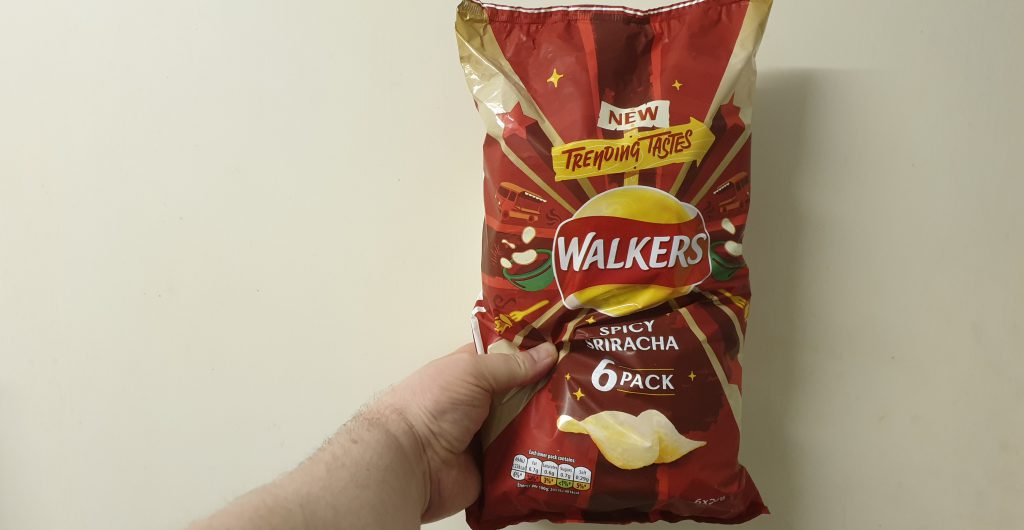
I think it was when I discovered that Heinz had a version of Sriracha sauce on the market that I was confounded and curious as to why this pungent preparation has become so mainstream. Now we find that Walkers have launched Sriracha flavour crisps – what exactly is going on?
We might begin with a casual perusal of what Wikipedia has to say on the matter and it appears appropriate that the origins of the sauce are contentious. That aside, it’s clear that a steady commercialisation of a local product, named after its originating village on the Gulf of Thailand, has been part of the evolution of the sauce since the first half of the 20th Century. Products made by local people evolved into commercial brands such as Gold Medal and Golden Mountain Brand Si Racha Sauce.
However, at times like these I look for a definitive reference, and in English-language writing on Thai food there seem few more definitive than David Thomson. In his Thai Food he describes “sauce Siracha” as “red in colour and full bodied in flavour”. The sauce is actually surprising in its simplicity given the depth of flavour. Thomson’s recipe is a blend of a cup of peeled garlic cloves, 5-10 re-hydrated dried chillies, a couple of tablespoons sugar, a cup of water and a pinch of salt, all simmered till tender then cooled and pureed. This is suggested as a good accompaniment to grilled meat or deep fried dishes. Thomson’s recipe omits vinegar which is present in the likes of the Cock brand (made by Huy Fong Foods in the US) and is probably closer to the Flying Goose brand in composition.
All very interesting, but as we are yet to be treated, though I could be wrong, to fish sauce or sambal oelek flavour crisps, I continued to be curious as to why this specific sauce has become such an international star. As I mentioned, completely mainstream brands like Heinz, McCormick and Walkers have bought into this concept, there are roasted nut mixes available with a “Sriracha” seasoning and some people are even making Sriracha ice-cream. What on earth is going on?
Certainly, Sriracha sauce and similar chilli sauces are pretty much ubiquitous on dinner tables across South East Asia as an accompaniment to noodles, spring rolls, stir fries, fried rice or pho, you name it. Yet it’s harder to put a finger on an explanation for the increasing popularity in the West, and why this very typical local product and not other similar sauces or products from the same cuisine. For example, the aforementioned famous Flying Goose brand of Sriracha sauce can be bought in most UK supermarket chains, even though I frequently find it pretty hard to find other Thai store-cupboard staples, shrimp paste in particular comes to mind. So perhaps the explanation does not lie in an interest in cooking authentic Thai food but in the nature of the spicy sauce itself.
A love of chilli heat and an interest in diverse and new sources of it might be closer to the story. In this regard, one might reflect on the popularity in the US and internationally of hot sauces and fiery barbecue sauces. This is closely related to if not originating from a groundswell of interest in growing chillies and preparing ever-hotter sauces with them. This might lead popular brands to cash in on ideas of smaller producers which have become popular and thus put similar, derivative products on the supermarket shelves. Similarly, a number of US-based fast food chains have also incorporated Sriracha-related elements into their recipes. Even Flying Goose market Sriracha mayonnaise which perhaps implies a desire from an established, authentic brand to widen the sauce’s appeal, and The Bangkok Post article below refers to a fight for market share among producers as popularity grows.
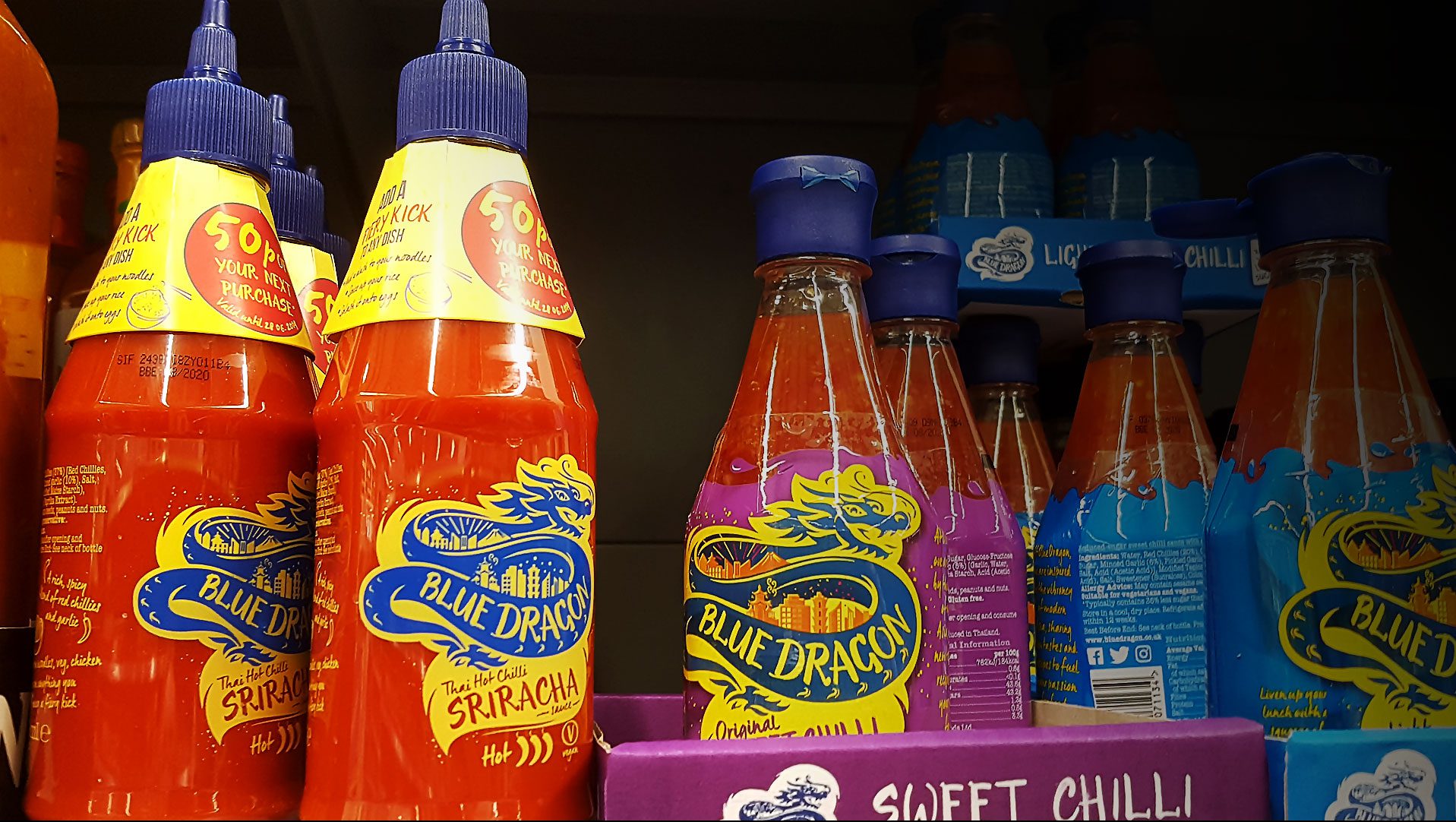
From my own experience, I could be wrong but I seem to recall this style of Thai chilli sauce, i.e. a red pureed sauce rather than the sweet Thai chilli sauce with chilli flakes suspended in a sugary syrup, used to just be sold by the likes of Sharwoods or Blue Dragon in the UK as “hot chilli sauce”. The latter brand now has its own Sriracha sauce available.
I first saw mention of Sriracha sauce as such when it was used as a condiment on the pork buns recipe in the Momofuku cook book. Therefore a transition from the Thai dining table to knowledgeable enthusiasts via fine dining refinement to mass market ubiquity is perhaps the most plausible explanation; an international appropriation of a local, home-made product as a mass market commodity, something akin to the gradual incursion into the craft beer industry by multinational brewers?
So, the fact that Walkers also have, at the time of writing, a pulled pork flavour available as part of a “trending tastes” range suggests that current fashion must be at play here (what price artisan IPA flavour Ben & Jerry’s?). Typically by the time big business has taken an interest in such matters, cutting edge tastes have already moved on. But when even The Bangkok Post describes the growth in popularity of Sriracha as a phenomenon, I doubt that I am going to be able to come to a rational conclusion on the matter. Therefore, I would suggest that we simply eat up and enjoy.
“A Sauce of Inspiration” – The Bangkok Post on Sriracha
Footnote
Purely for the sake of accuracy, you understand, I tried the Walkers Spicy Sriracha crisps. I would describe them as making passing reference to the flavour while being perfectly edible. As virtually all crisps are. A bit like porn; there’s no such thing as bad crisps. Any crisps are better than no crisps.